Delta 3D printer
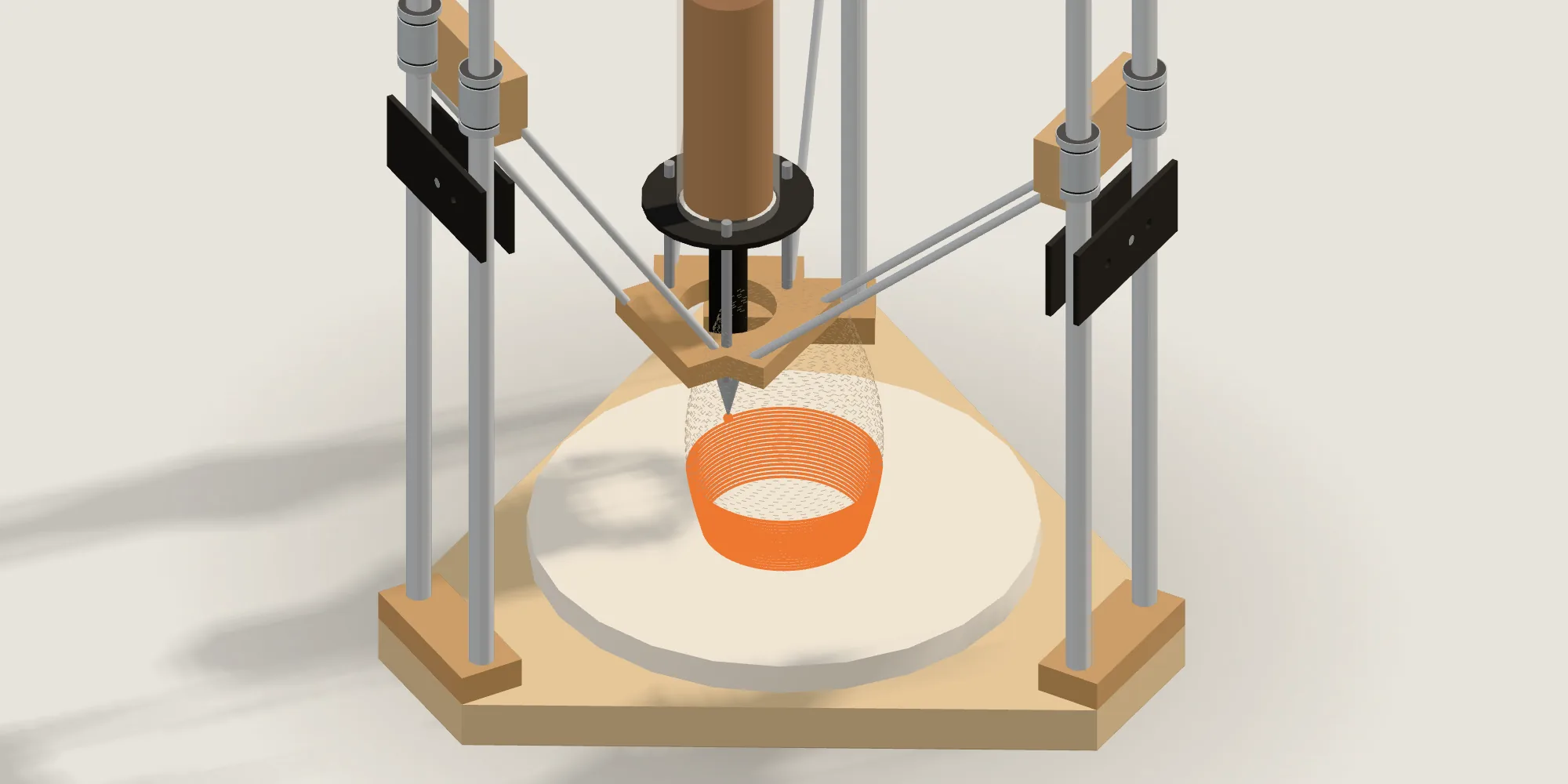
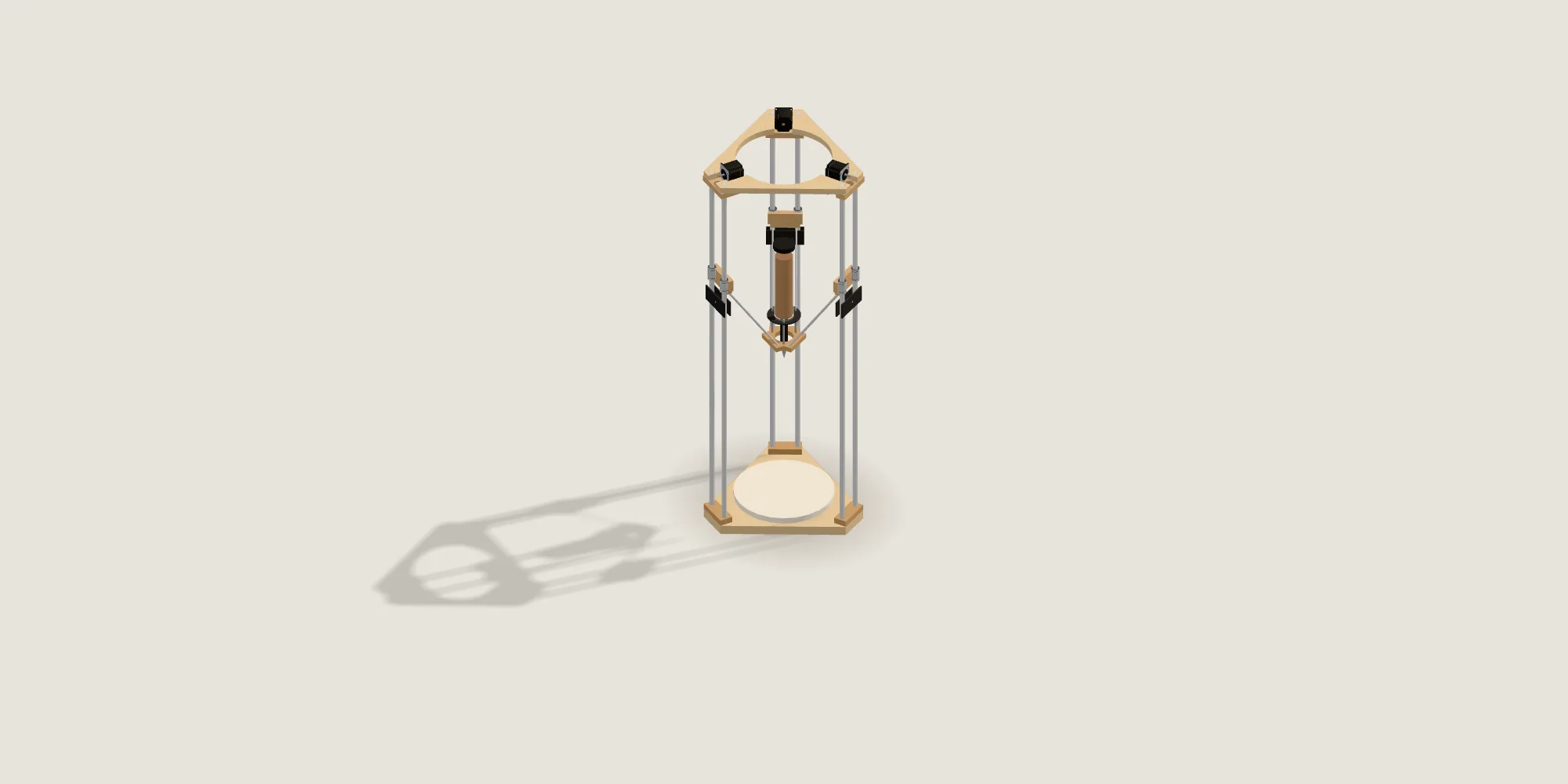
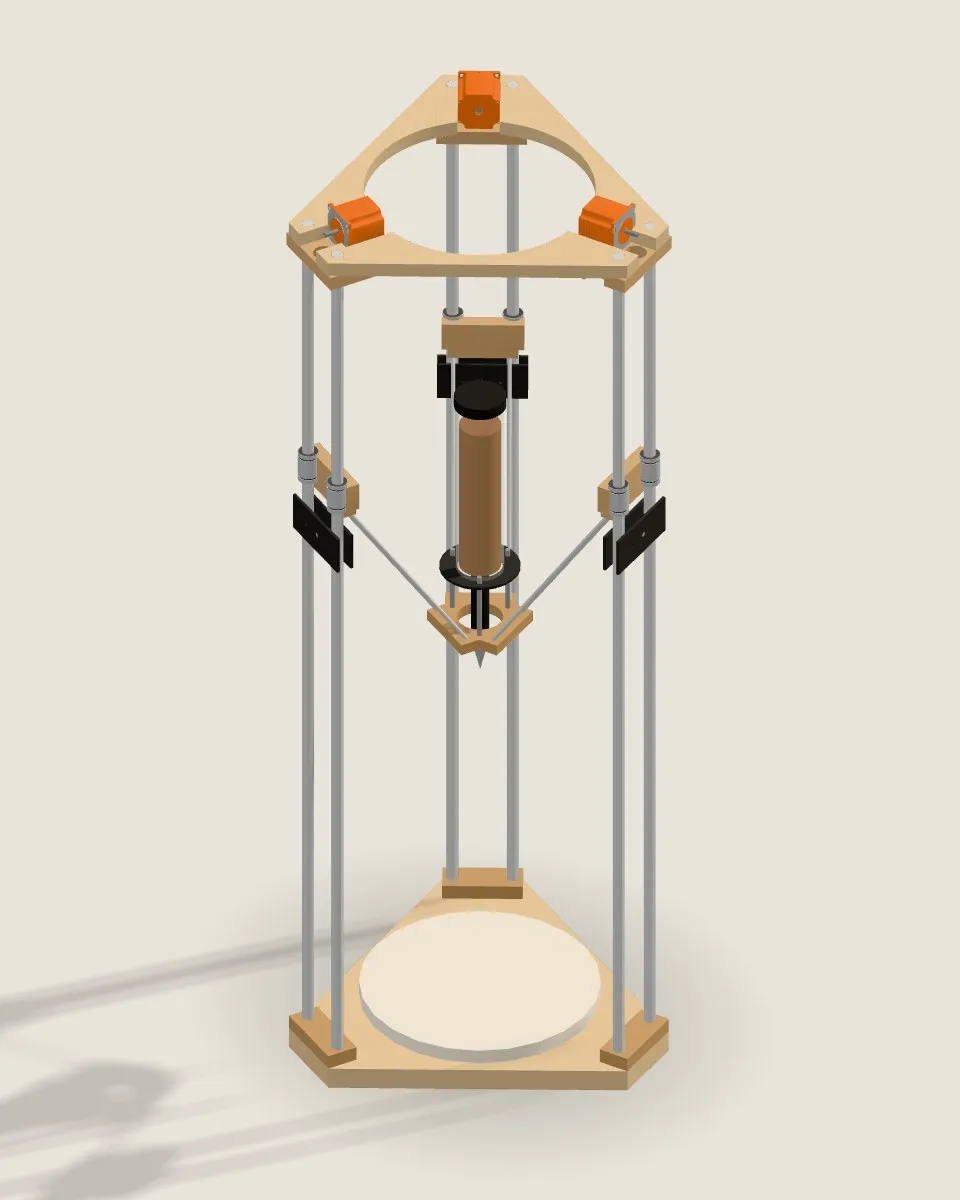
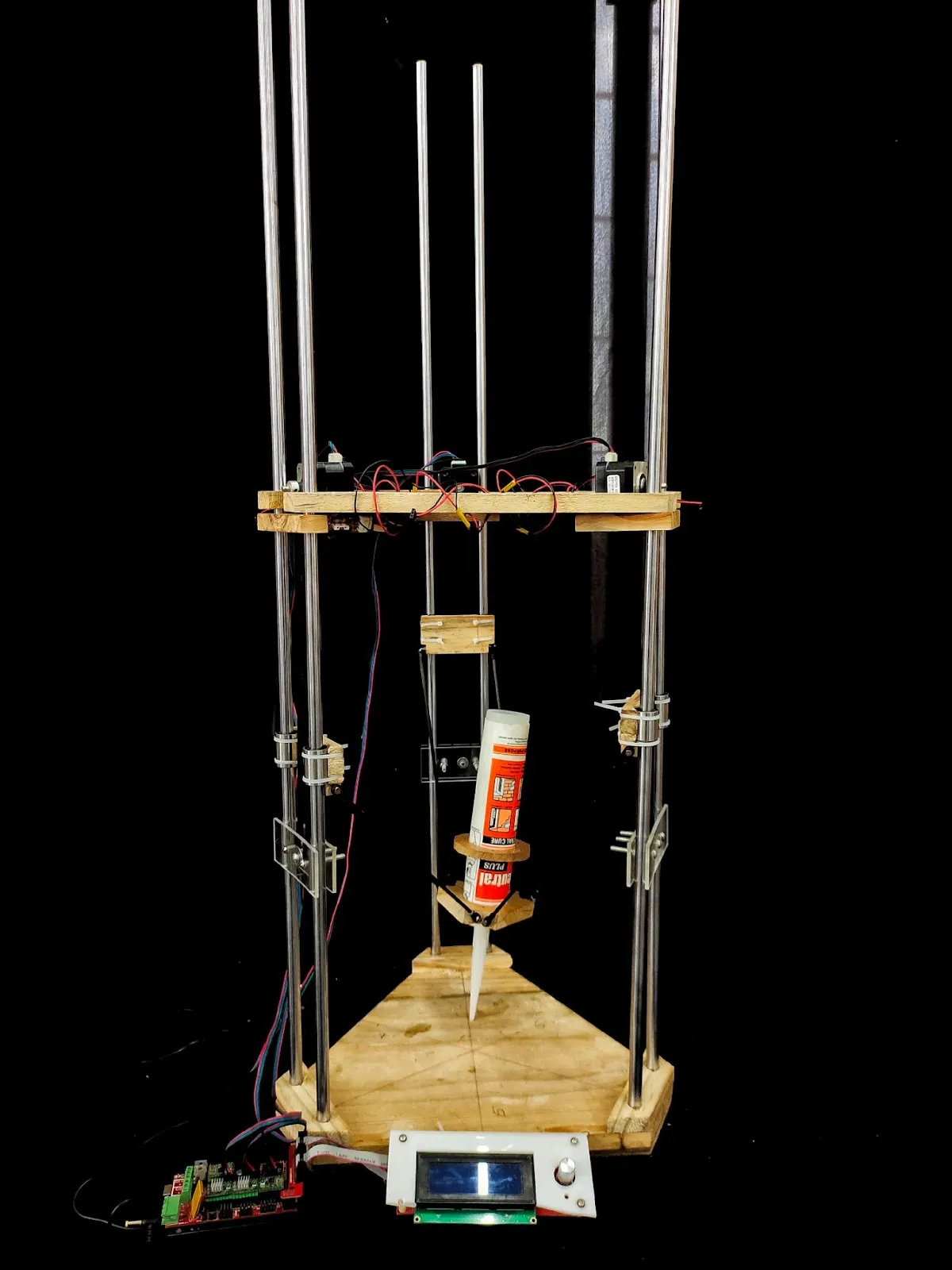
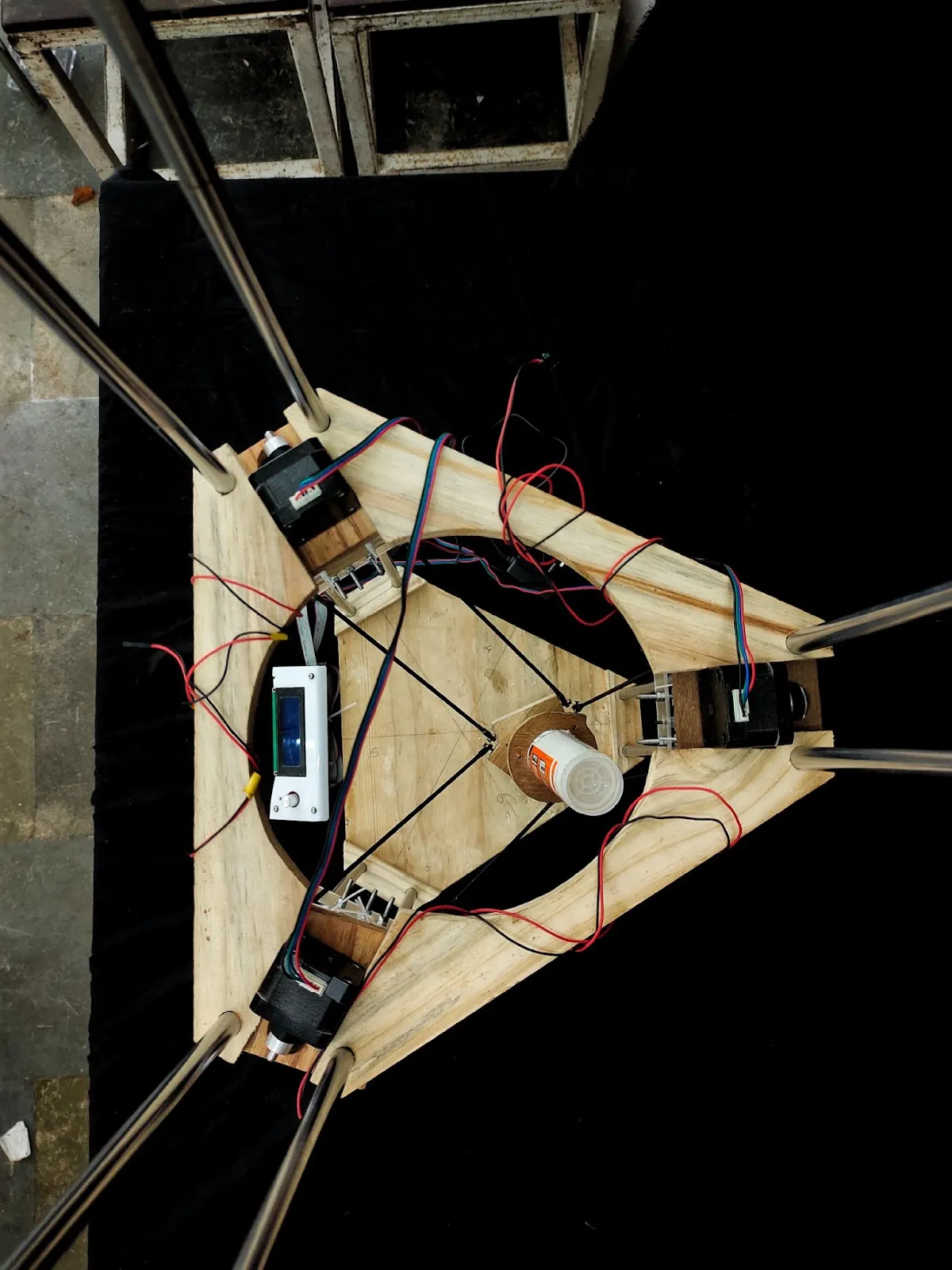
We rebuilt the college’s Cartesian 3D printer as a delta printer for clay, and I wrote the code that runs it.
The course
- Course
- Architectural Kitchen, a workshop by Dushyant Asher
- When
- Semester 3, 2022
- With
- Gauri Shinde
The work
- Material
- Clay
- Tools
- SketchUp, AutoCAD, Photoshop, Python, Arduino (Marlin firmware)
- Status
- Built
01
Aim
To make a delta 3D printer from the parts of the Cartesian 3D printer the college already had, and to write and build the working code that runs it.
02
The question
How do the tools shape our idea of form and space?
The course looked at form-making and at materials through the tools we use. How are design processes shaped around those tools, or is it the other way round? And with the tools that exist today, how can a tool be rethought, or upgraded?
So we rethought the college’s Cartesian printer and rebuilt it as a delta printer, which is faster, more efficient and more versatile.
03
Parts to code
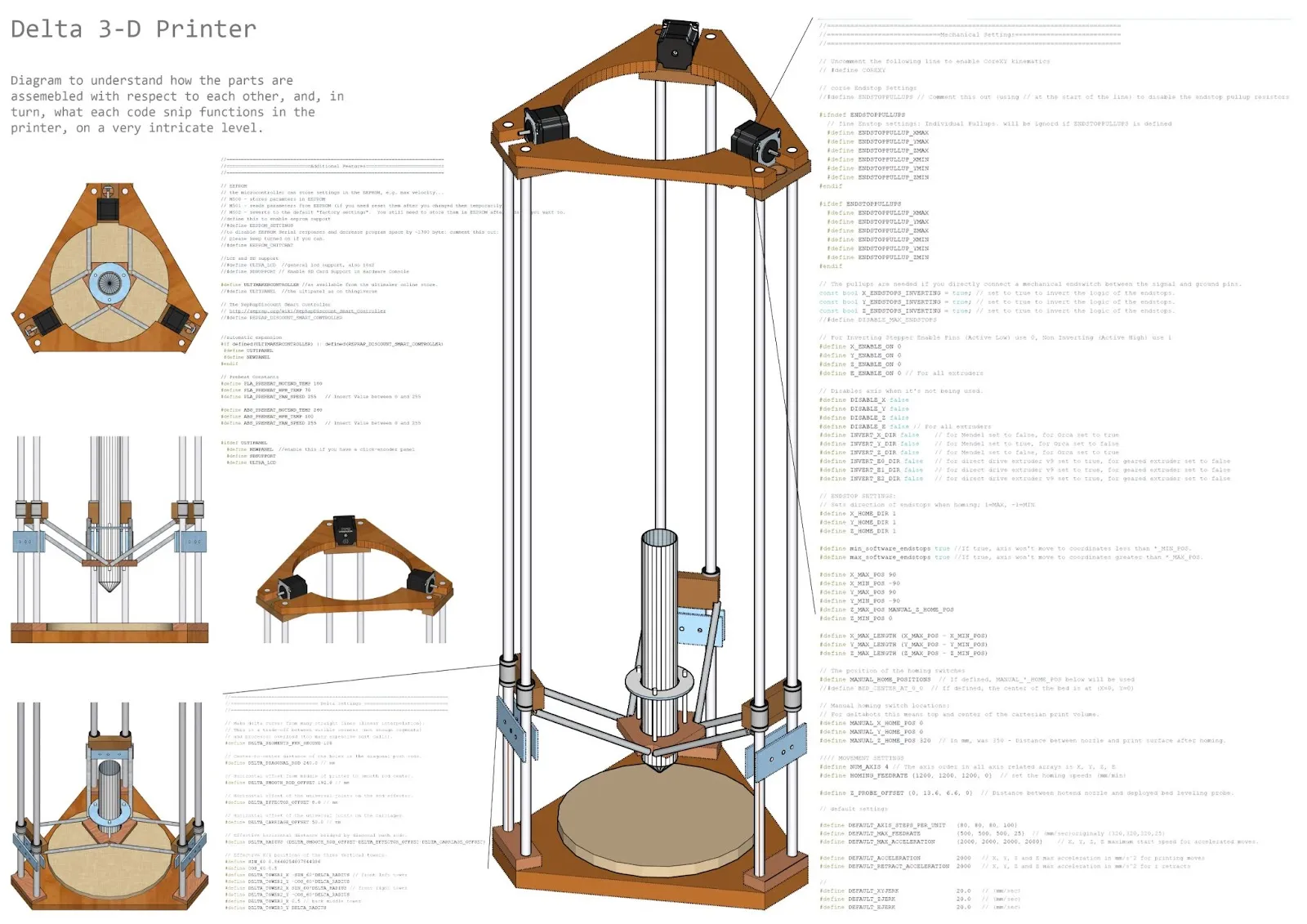
One sheet to understand how the parts fit together and, in turn, what each piece of the code does in the printer, in close detail. Three of its lines, each with the part it sets:
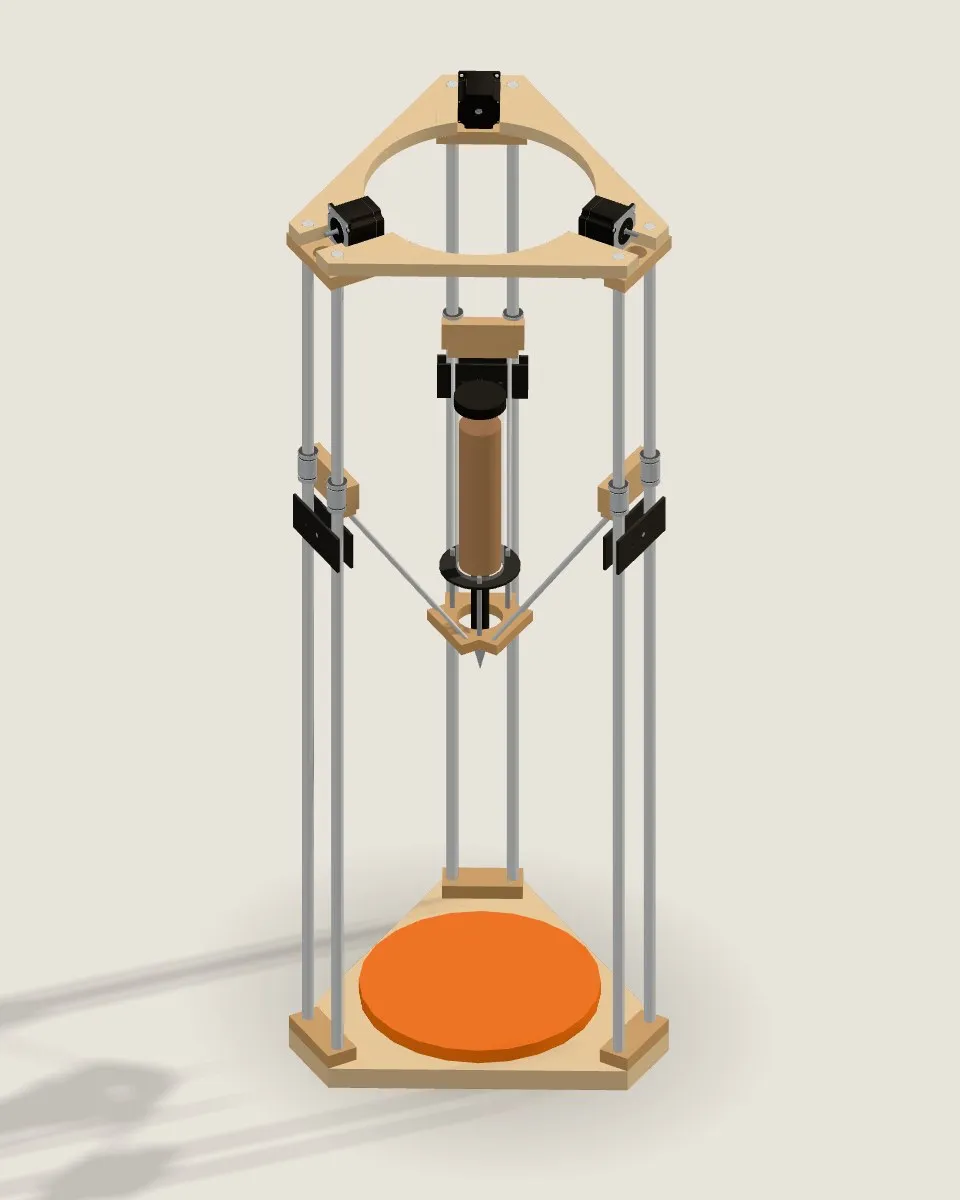
Print area
#define X_MAX_POS 90
#define X_MIN_POS -90
#define Y_MAX_POS 90
#define Y_MIN_POS -90
How far the nozzle may travel over the bed: 90 mm each way from its centre.
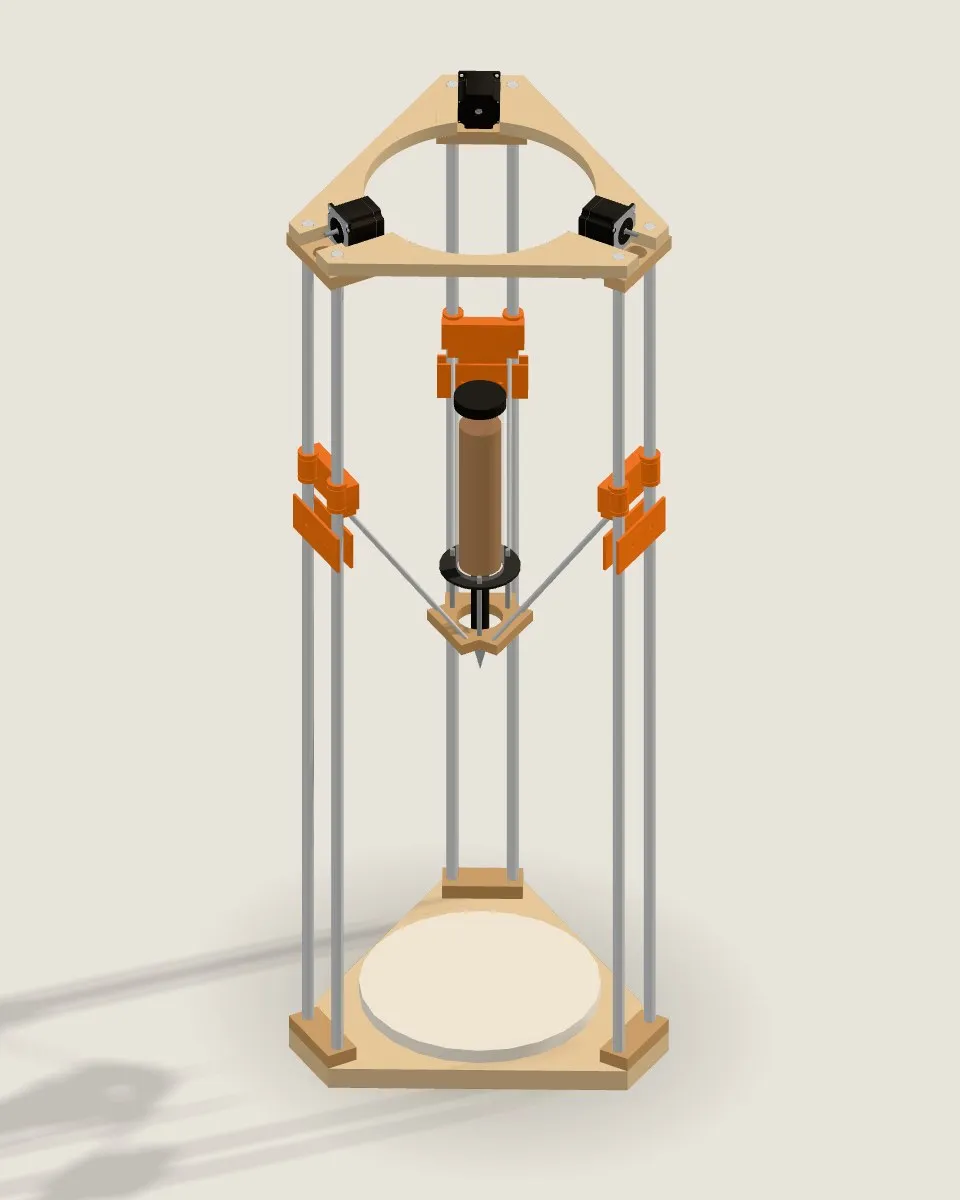
Home
#define MANUAL_Z_HOME_POS 320 // In mm, was 350 - Distance between nozzle and print surface after homing.Where the carriages park at the top of the towers: the nozzle 320 mm above the bed, down from 350.
Speed
#define DEFAULT_MAX_FEEDRATE {500, 500, 500, 25} // (mm/sec)originaly (320,320,320,25)How fast the three motors may drive the towers: up from 320 to 500 mm a second.
04
What it taught
Architectural Kitchen was about exploring materials and the tools we use to work them. Rebuilding the printer showed how much a tool decides before the clay is touched: its frame, its arms and every line of its settings set what the clay can become.